Delonghi La Specialista Opera vs Breville Barista Express Impress
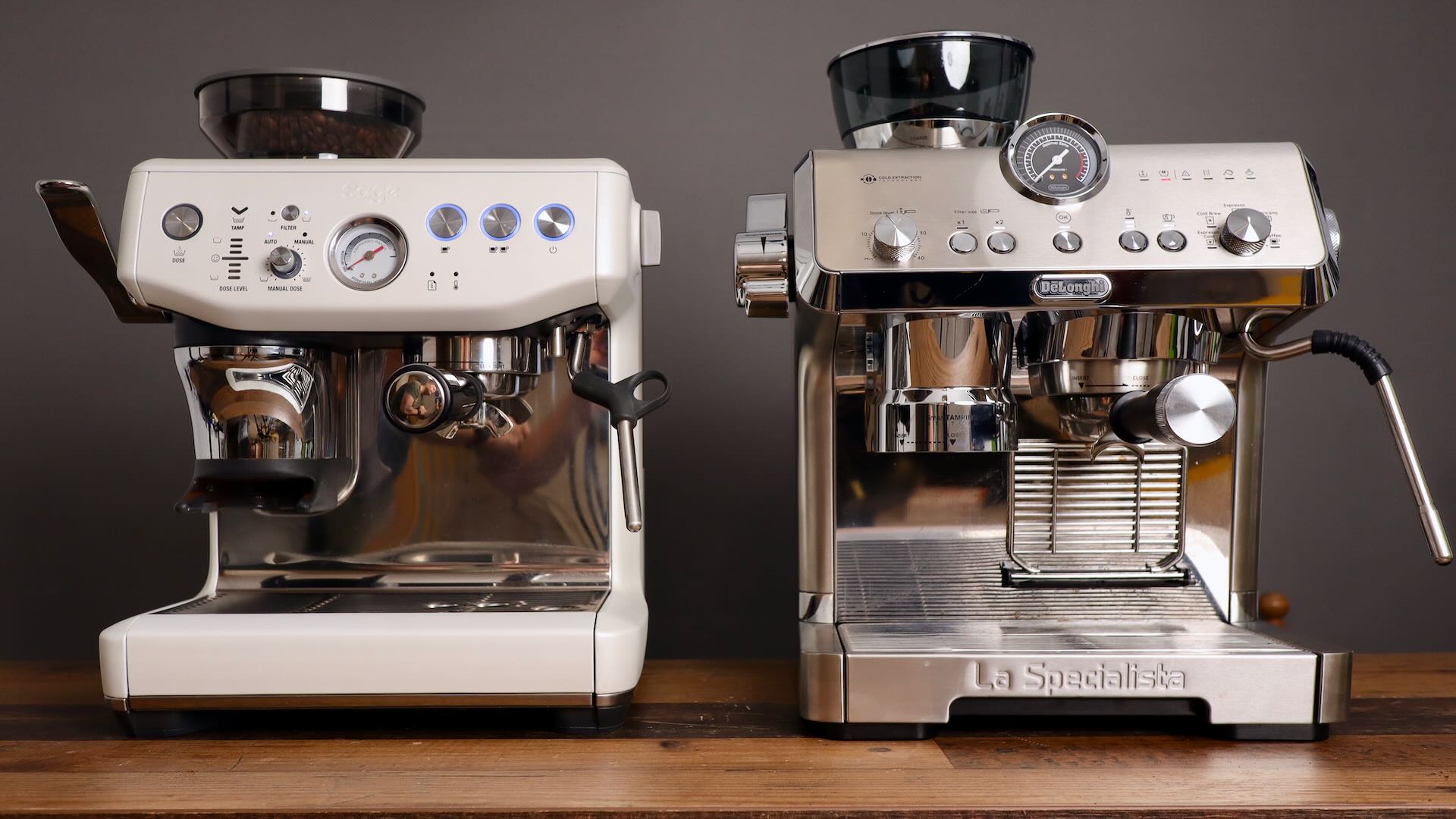
Here are the Breville Barista Express Impress and Delonghi La Specialista Opera from the front
Barista Express Impress vs La Specialista Opera

Breville vs Delonghi – an Ongoing Battle.

Breville (or Sage as it’s known in Europe) has long been the King of home semiautomatic espresso machines. Even today, being more than 10 years old, the Barista Express is the best selling semiautomatic worldwide. Its newer sibling, the Express Impress takes a step forward, and offers integrated tamping.

Delonghi released the La Specialista Arte EC9155 model a few years back, to compete with the Barista Express, but it failed in my opinion, as it had too few grind settings, and some manufacturing issues.

However, now Delonghi is back with a much improved model in the La Specialista Opera EC9555. It’s got enough grind settings now, plus a few new nice to have features that the Breville line omits. Maybe most important of all is the drink selection.
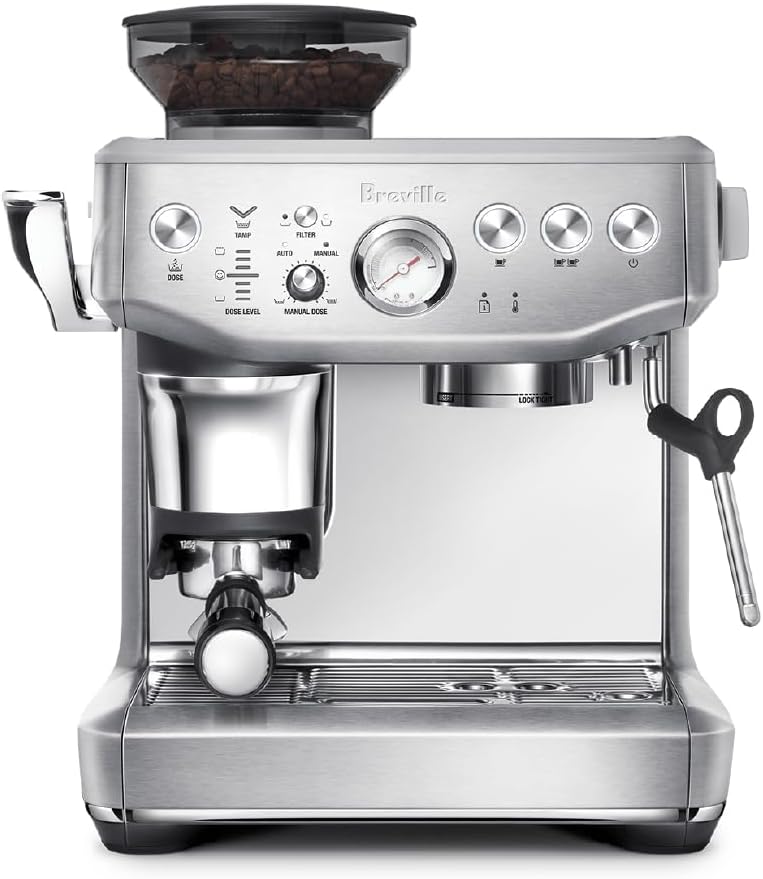
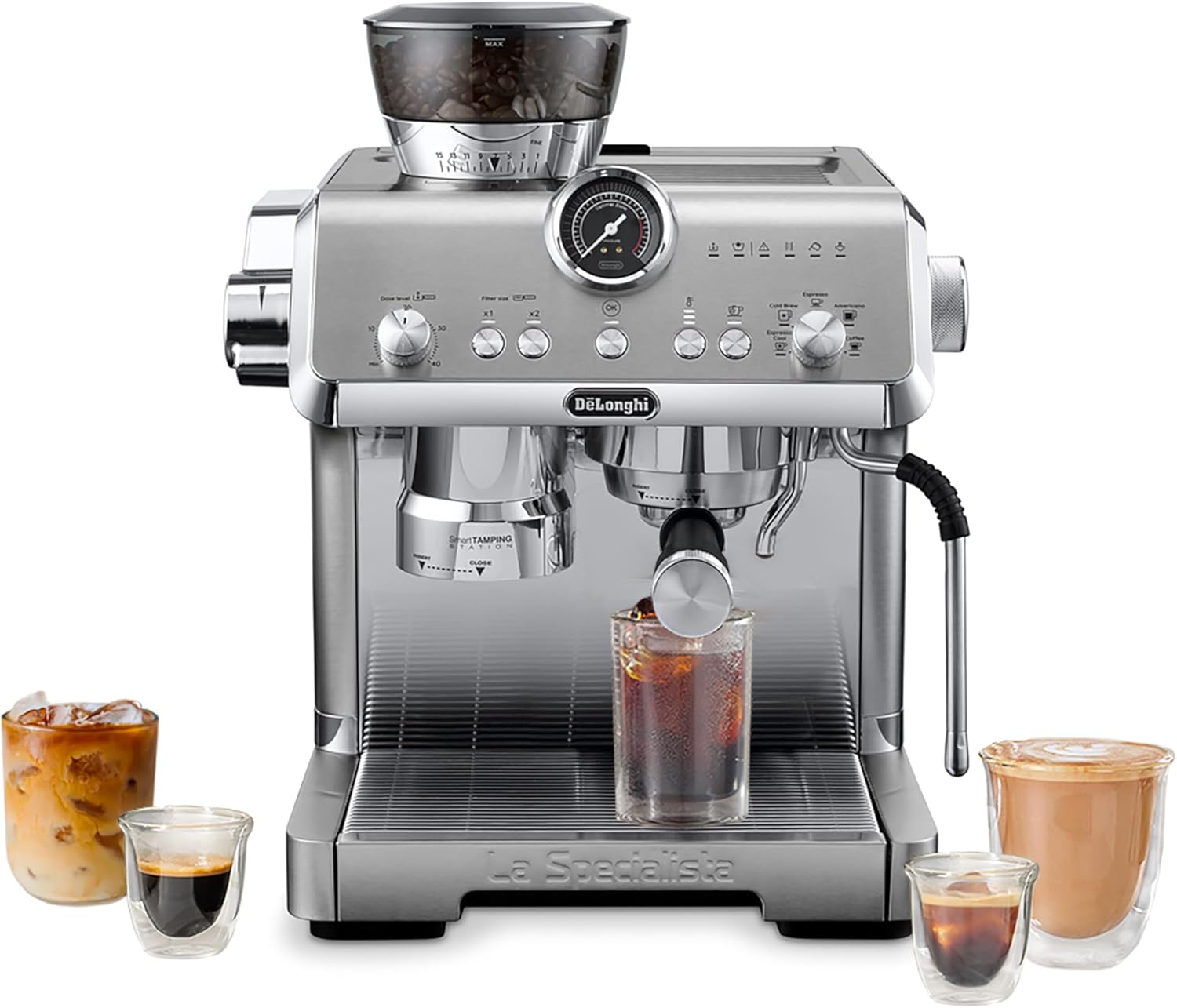
Breville Barista Express Impress

Breville Barista Express Impress

La Specialista Opera EC9555

Drink Selection

So this is where the Opera really shines. It offers besides a normal espresso, an option for an Americano, plus a coffee crema. Maybe most important of all to new users however, is the addition of cold drinks! The Opera can do a ‘Cool Espresso’ and a ‘Cold Brew’ coffee. These are drinks omitted on the Barista Express line from Breville.

The Breville just has two options, to either start a volumetric extraction for a 1 cup or 2 cup espresso. So, it’s pretty basic in that regard, although it works well. What the Barista Express line does however incorporate is adjustable pre-infusion. The setting of pre-infusion is something left out entirely by Delonghi.
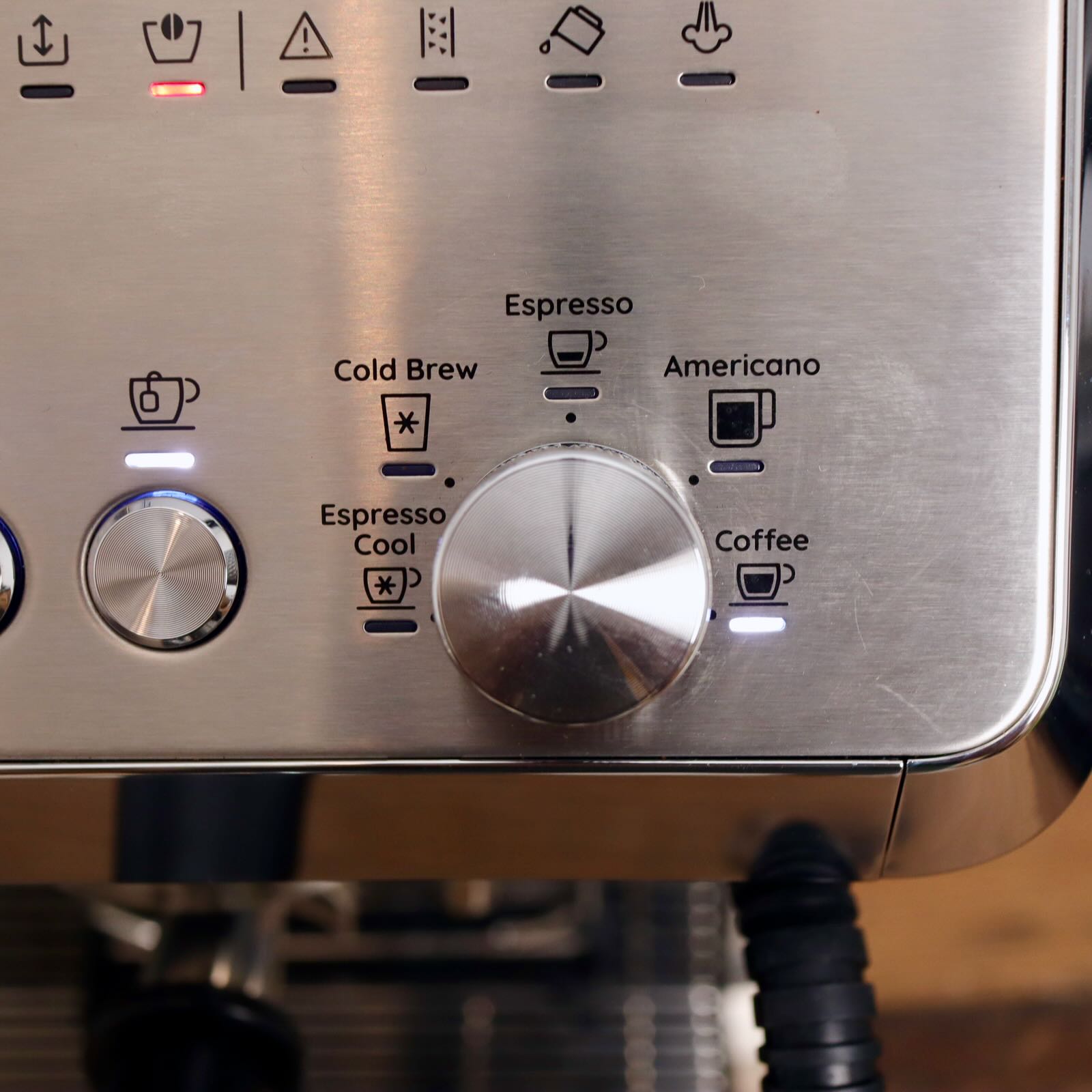
I like the drink menu on the Delonghi La Specialista Opera

Delonghi La Specialista Opera – Drink Menu

Pre-Infusion

On the Breville, if you press and hold the 1 cup or 2 cup button, you enter ‘Manual Mode’, and you can therefore pre-infuse up to 60 seconds, at a lower pump pressure. Once you let go, then the extraction starts with full pressure. This is really a nice feature to experiment with, especially when you have new beans and don’t know how long the extraction will take.

The Delonghi on the other hand has no options to change the pre-infusion, although it does in fact pre-infuse for 7 seconds, pauses for 1 second, then extracts at full pressure. But that does not seem to negatively affect the drink quality for Delonghi, as I have gotten some excellent drinks out of it. Let’s talk about that next.

Drink Quality

I feel that both of these machines can deliver very good drink quality, if you consider a few factors. First of all, you need pretty freshly roasted beans, like 2 weeks to 2 months off of roast date. Secondly, the machines should be fully warmed up, including their portafilters. I’d suggest running 1-2 shots through the machines without coffee grounds, to get the water circuits, brew groups, and portafilters warmed up.

In regards to espresso, both machines can provide a nice syrupy, chocolately drink for med-dark roasts, provided the grind and dose are dialed in pretty well. Aim for twice the yield – meaning if you put 16 grams of coffee ground in the basket, aim for 32 grams out in 25-30 seconds.

Besides being able to make good traditional espresso, these can also do better than their predecessors for lighter roasts, since you can increase the temperature. The Opera can be set to 96 degrees C, while the Barista Express Impress can be set for 95 degrees C. This results in being able to extract hot enough to end up with drinkable shots with lighter roasts, that aren’t too sour. Even so, I don’t think that either of these machines are really designed for lighter roasts. Their grinders are the bottlenecks here.

Grinders

Both the La Specialista Opera and Barista Express Impress use very similar grinders – they’re conical, stainless steel, small, and driven by smallish motors. The Express Impress comes with 25 clicked settings, while the La Specialista Opera has 15 clicked settings. So, the former beats the latter, with a larger adjustable range. That being said, I’ve always been between 8-10 on the Opera, and that has sufficed for me.

The Breville however has another advantage: the bean hopper. It’s better on the Breville because it’s removable. The bean hopper on the Opera is stationary, and cannot be removed for cleaning, or gaining access to the burrs. This will be a no go in some people’s books.

However, the Opera has a really cool trick up its sleeve – it has a bean hopper sensor. Gone are the times of an empty spinning burr set, waiting for beans because they’ve run out. The machine gives an indication that the beans need to be refilled, with an illuminated signal light. That’s cool! This works with two photoeye sensors, built into the hopper. Talking about sensors, the Delonghi gets points for that in the next section…
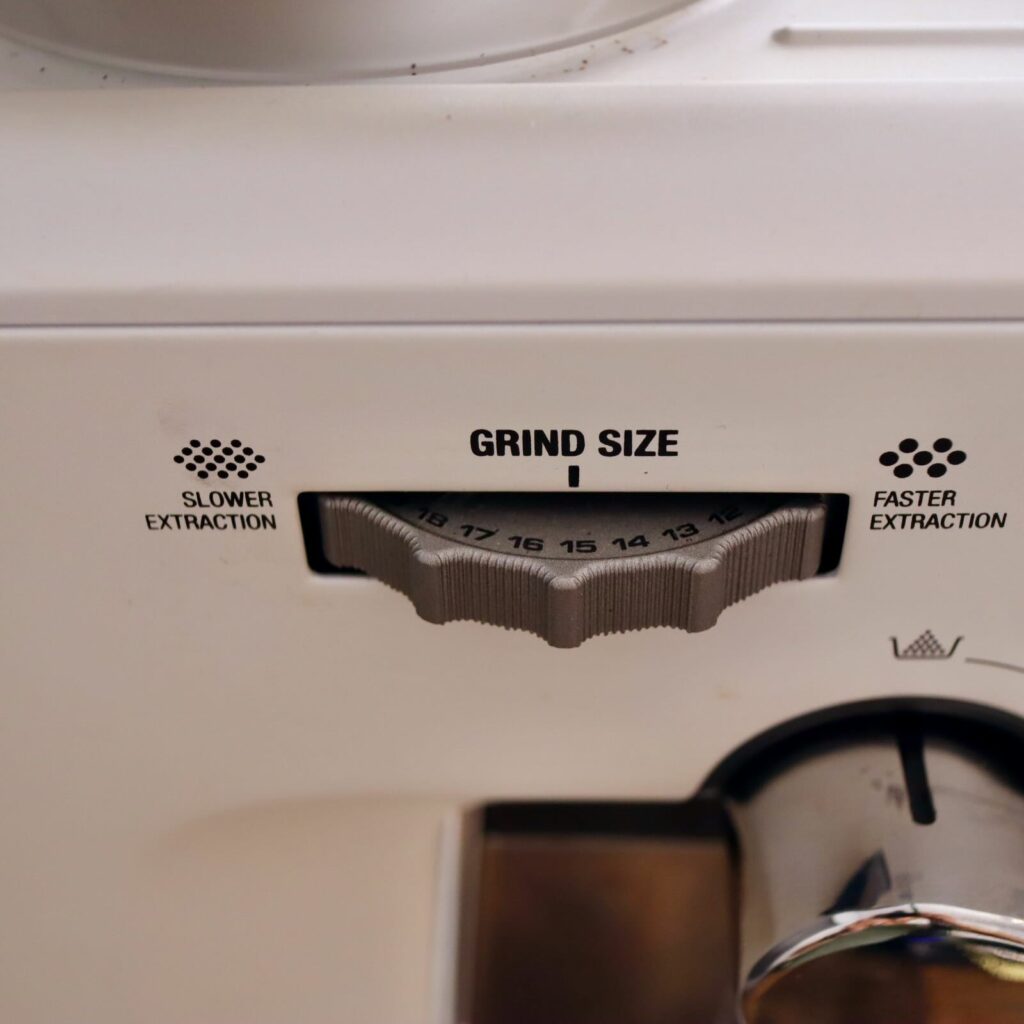
The Breville Barista Express Impress has 25 grind settings

Breville Barista Express Impress – 25 Grinding Settings
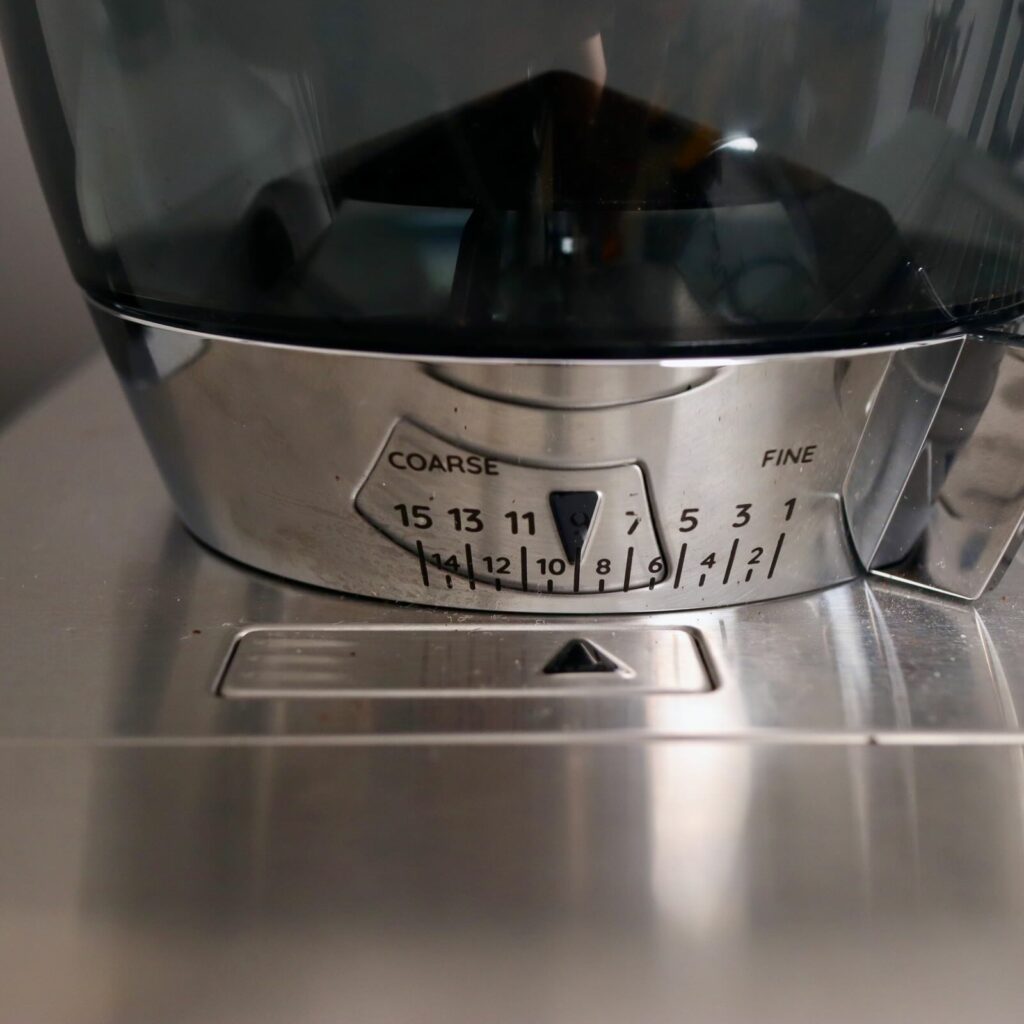
The Delonghi La Specialista Opera has 15 grind settings

Delonghi La Specialista Opera – 15 Grinding Settings
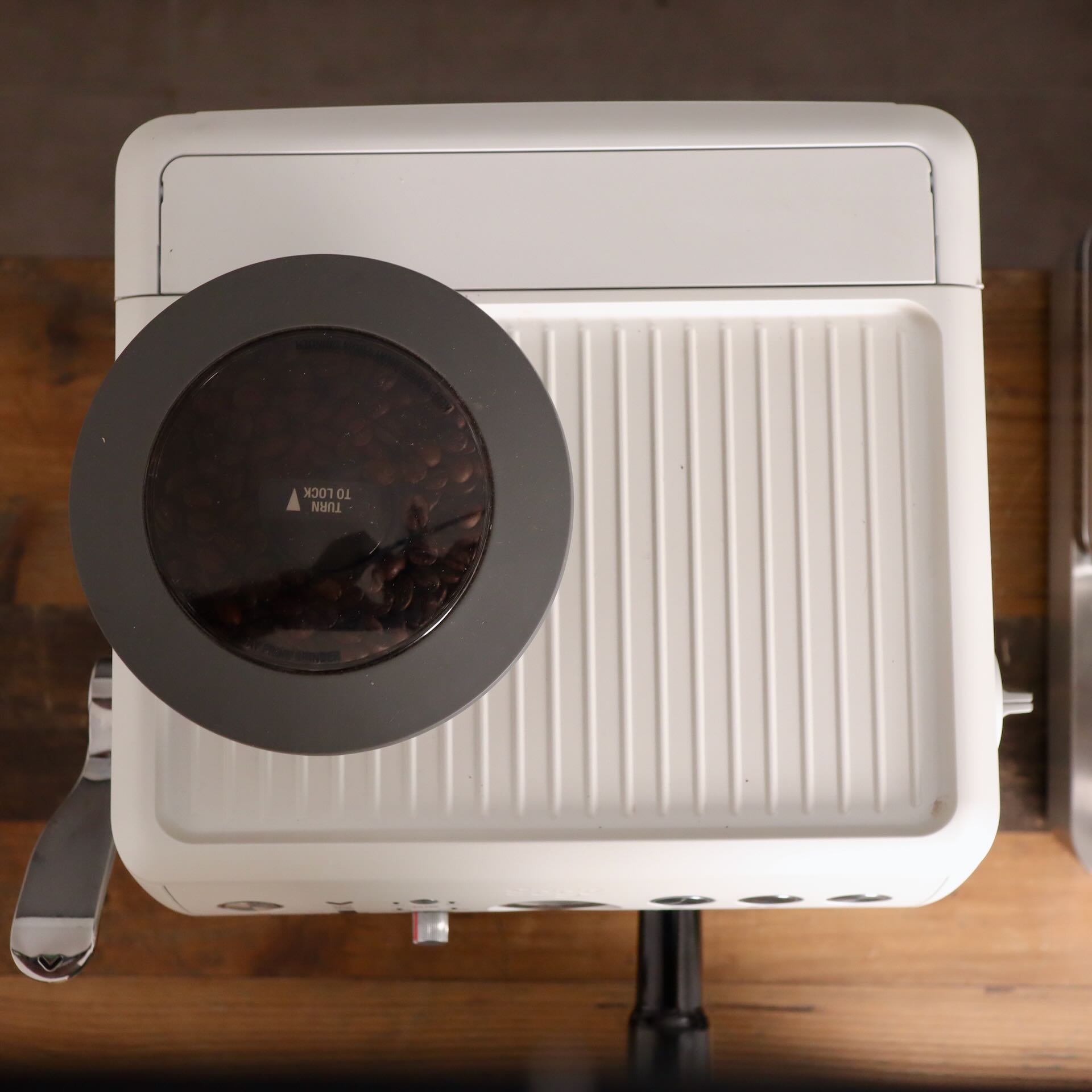
Here is the Breville Barista Express Impress from above

Breville Barista Express Impress from Above
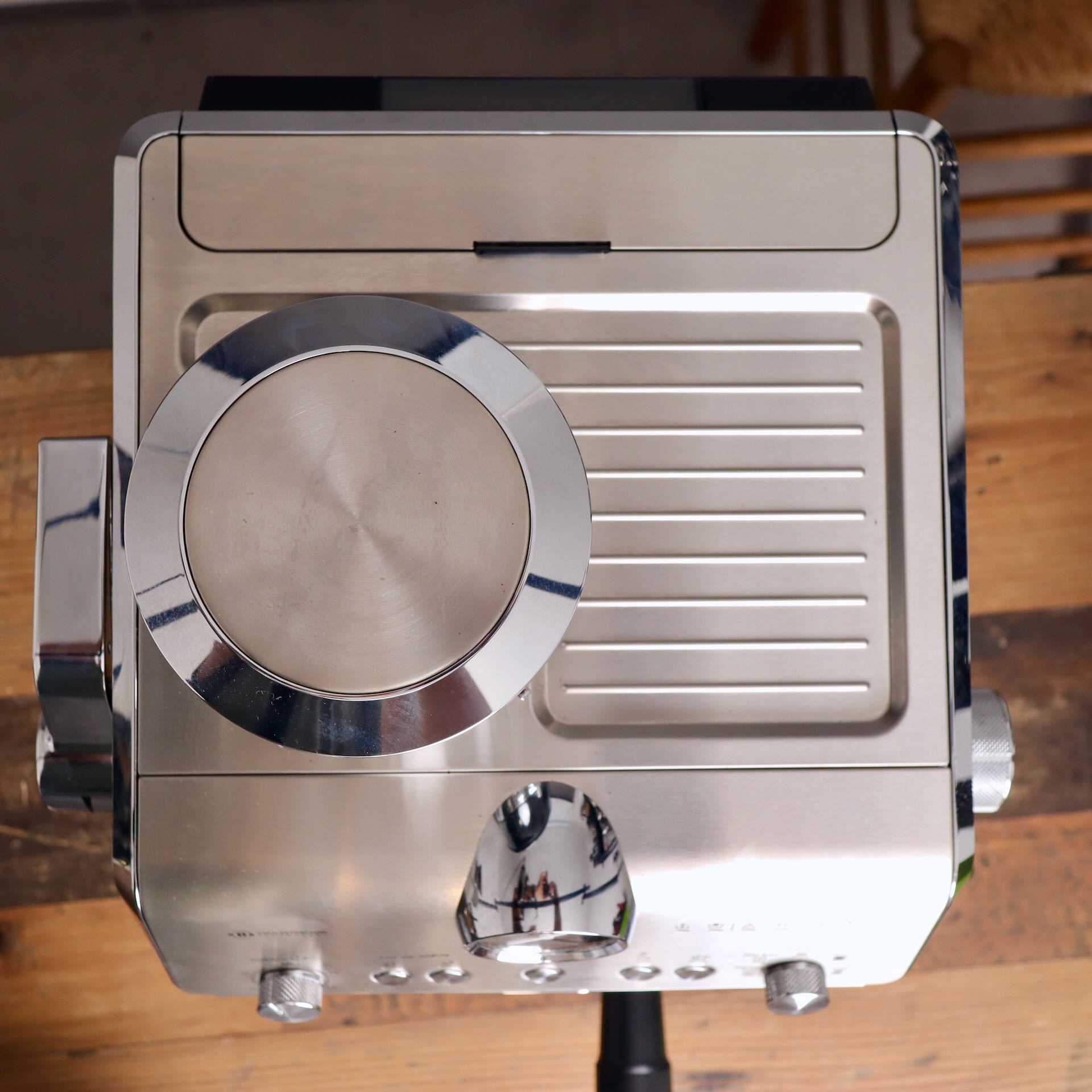
Delonghi La Specialista Opera from Above

Water Tank

Both the Delonghi and the Breville have large 2 liter water tanks, but the Delonghi has a decided advantage: it includes a float sensor for water level. Therefore, you never start a drink with too little water. You don’t know how many times I’ve run out of water on the Barista Express Impress, in the middle of pulling a shot! So then you can throw that aborted shot away.

I also find that the Delonghi uses in total less water. Both machines use some water to cool down their thermoblocks after steaming milk. The Breville is however a hungry girl, and really goes through a lot more water in cooling down than does the Delonghi. Point for Delonghi here.

That leads us to the drip trays, and emptying them, which is certainly better on the Breville.
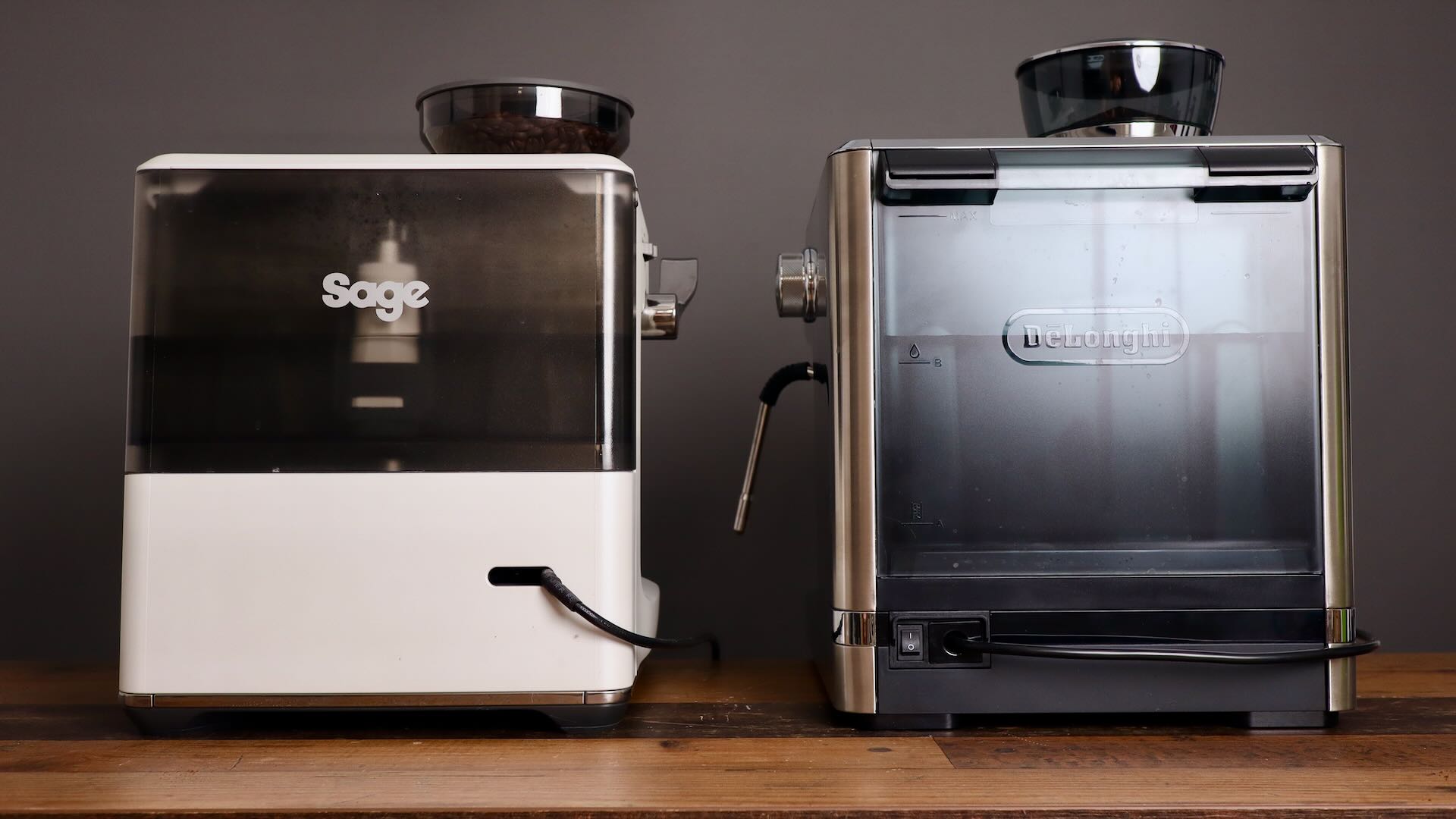
Here are the Breville Barista Express Impress and Delonghi La Specialista Opera from behind

Breville Barista Express Impress vs Delonghi La Specialista Opera – Back Water Tanks

Drip Trays and Build Quality

I really like the drip tray better on the Breville. While both are solidly made, the Breville is easier to wipe off, easier to dump into the sink, and also has a larger capacity. I’ve often spilled the water in the Opera’s drip try while moving to the sink, as it’s dimensioned too small, and gives an indication too late, to dump it.

As for build quality, I think they’re quite similar. They’re both made with a metal casing, which is grounded on both models. The metal on the Breville is magnetic, while it’s not on the Delonghi Opera. That’s either good or bad, depending on your view point. I like magnetic casings, to stick things on with magnets.

I’d say the build is maybe just slightly more refined on the Breville, but not by much. Delonghi has really caught up here, gifting the Opera with a fully stainless steel design, even on the fascia. Where the Breville still definately wins though, is the integrated tamper.
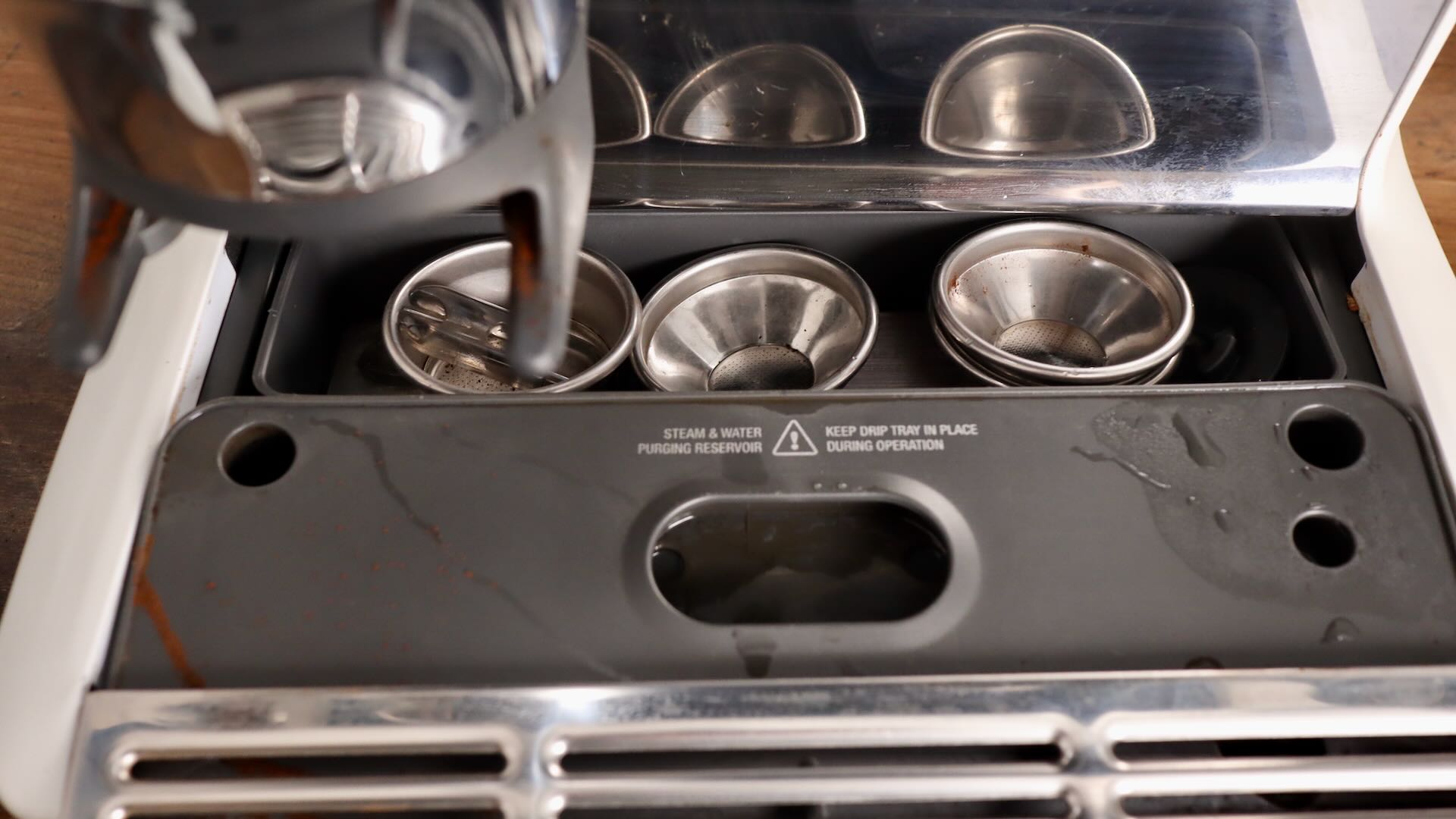
I like the hidden cubby hole on the Breville Barista Express Impress

Breville Barista Express Impress Hidden Storage

Integrated Tampers

I gotta just say it – Breville developed an awesome tamper from the get go. It looks slick, it has a removable cover, it does an 8 degree puck polish twist automatically, and its smooth base keeps the grounds where they belong – in the basket. It’s also super robust.

I was originally skeptical about the integrated tamper in the La Specialista line – they look cheaply done. In fact the lever does feel pretty cheap, especially compared to the Breville’s, but it works well. The Delonghi does a fine job tamping, even if the haptic feeling isn’t as good. But, it does not do an automated puck polish. For that, you have to leave the tamping lever down, and remove the portafilter from the cradle. That motion will force a puck polish.

Maybe the biggest problem I have with the Delonghi tamper is that it does not feel super robust on the machine body. You can see the left side of the machine bow down a bit while tamping – that doesn’t give the best impression.
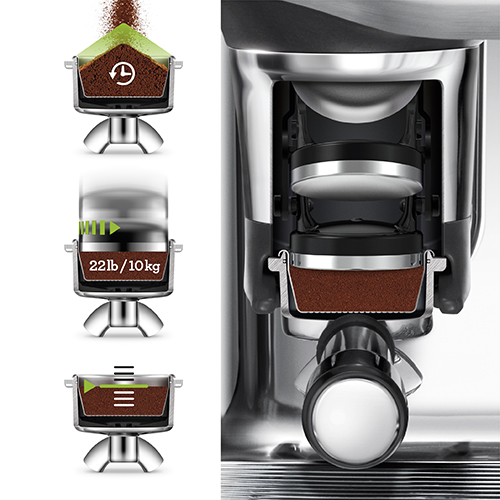
This is a clever integrated tamping system, in Breville's espresso machines

Impress Puck Tamper

The Impress tamper on the Breville Barista Express Impress

Breville Barista Express Impress – Tamper
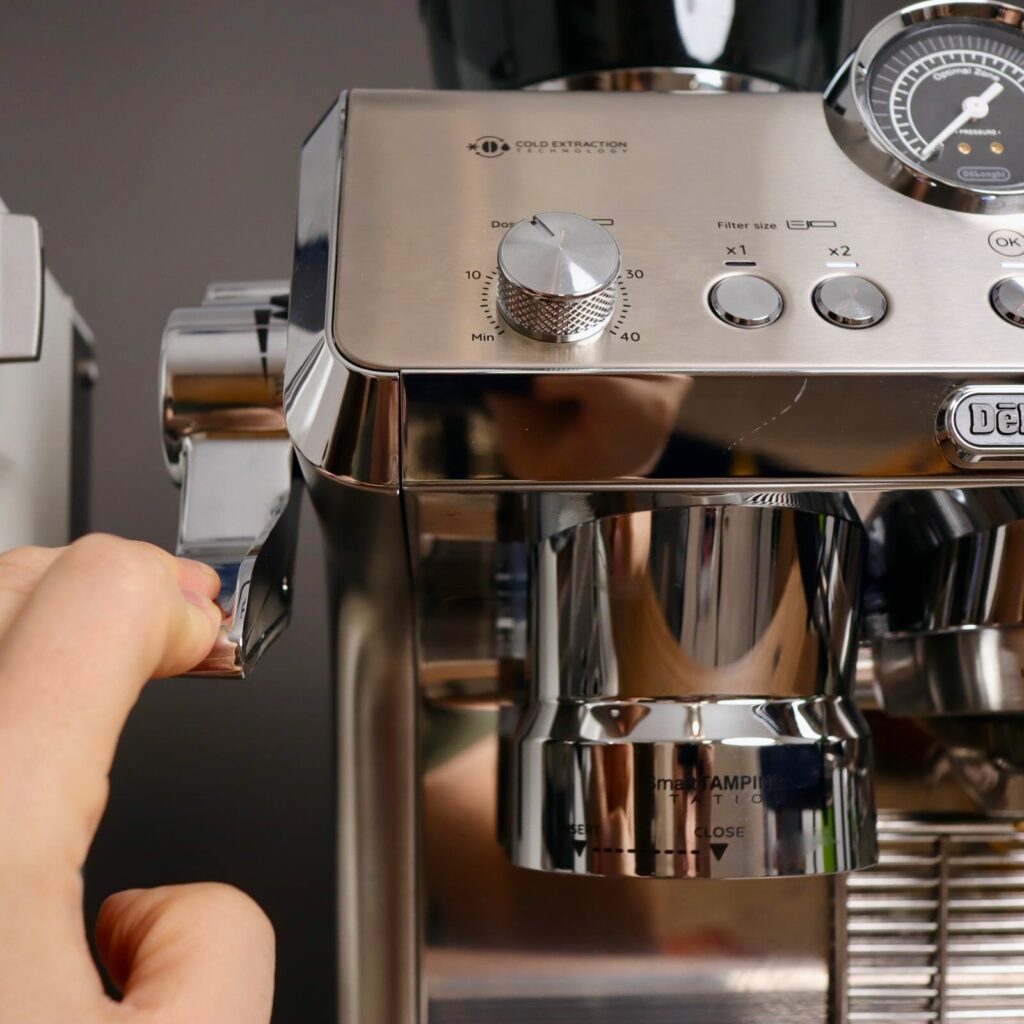
Here is the integrated tamper on the Delonghi La Specialista Opera

Delonghi La Specialista Opera – Tamper

Steam Wands

I would say that both steam wands are more than adequate, as they can both steam beautiful silky milk for cappuccinos and latte art. They are however, both a little on the slow side, taking 10-20 seconds to warm up to steaming temperature, and requiring about 60 seconds to warm up around 200ml or 8 ounces of milk to 60 degrees C or 140 F.

Where I do much prefer the steam wand of the Delonghi however is in the clean up. Since the Opera employs a ‘non-burn’ steam wand, the outside of the wand doesn’t get too hot, and milk is really easy to wipe off after steaming. The Barista Express on the other hand does not have this feature. It gets really hot, and milk gets caked on easily. It’s hard to get off, and looks kind of gross.

Design and HMI

I like how both of these look, honestly. If I had to choose one just based on aesthetics though, it would be the Breville Express Impress. It just looks cooler, with its angled fascia and rounded corners. The integrated tamper also looks cooler than the one on the opera. Not that the Opera doesn’t look cool, because it does. This will come down to personal preference.

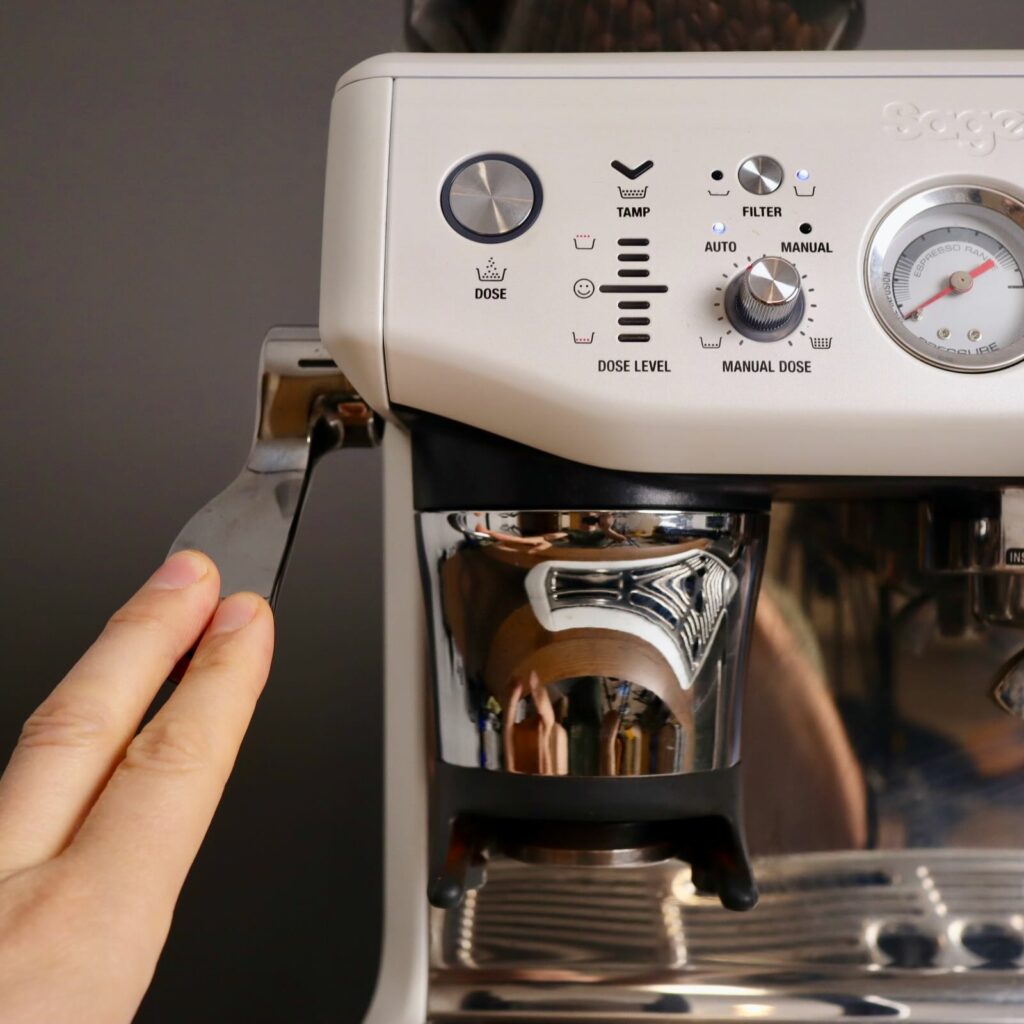
What I do like about both machines are their haptic features. They both have analog manometers, so you know the pressure range in the extraction. They also both have dials to turn for making selections, or buttons to press for carrying out commands (extract double espresso). I myself prefer this haptic experience over touchscreens.
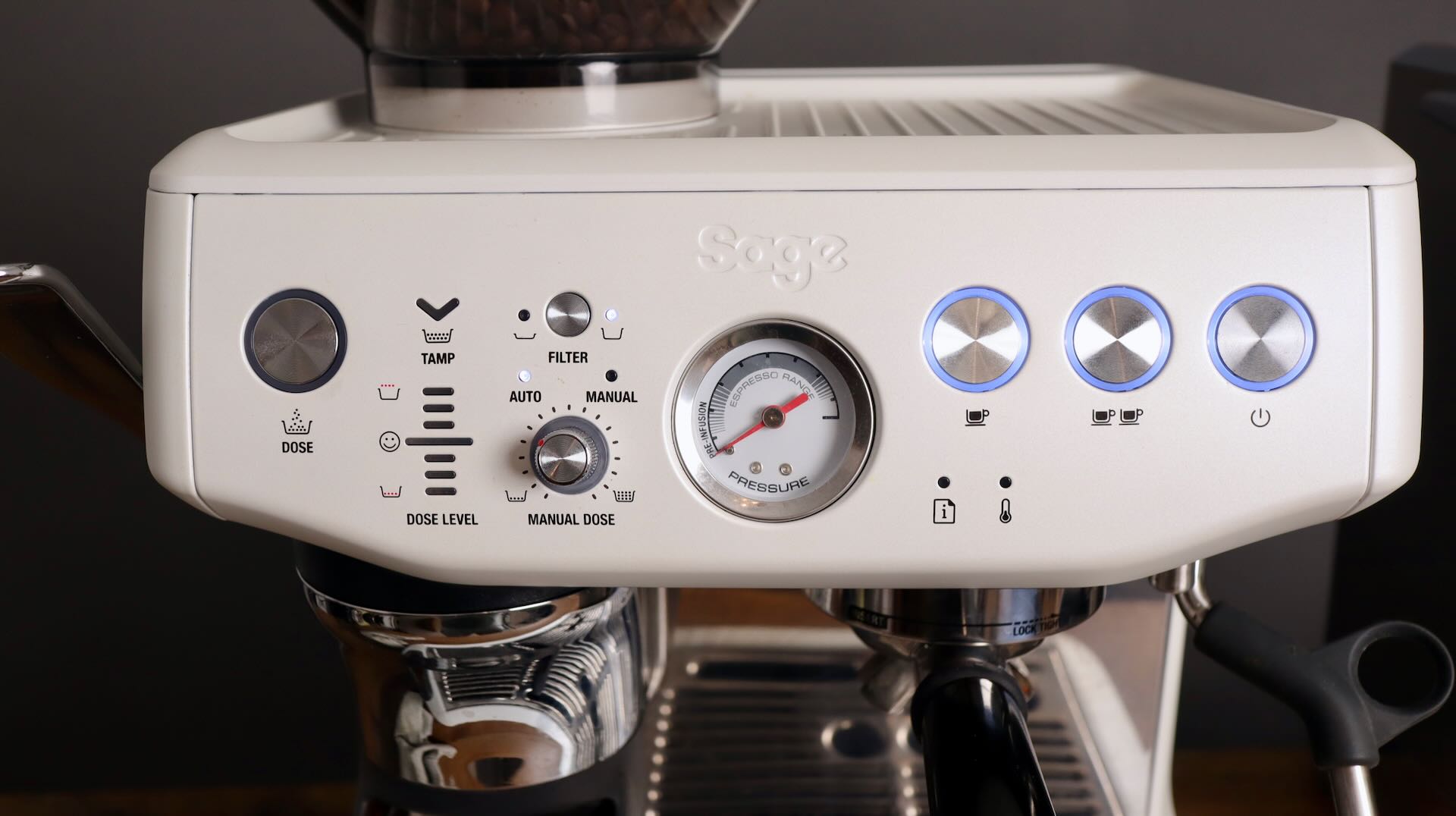
A logical panel layout on the Breville Barista Express Impress

Breville Barista Express Impress – Operator Panel
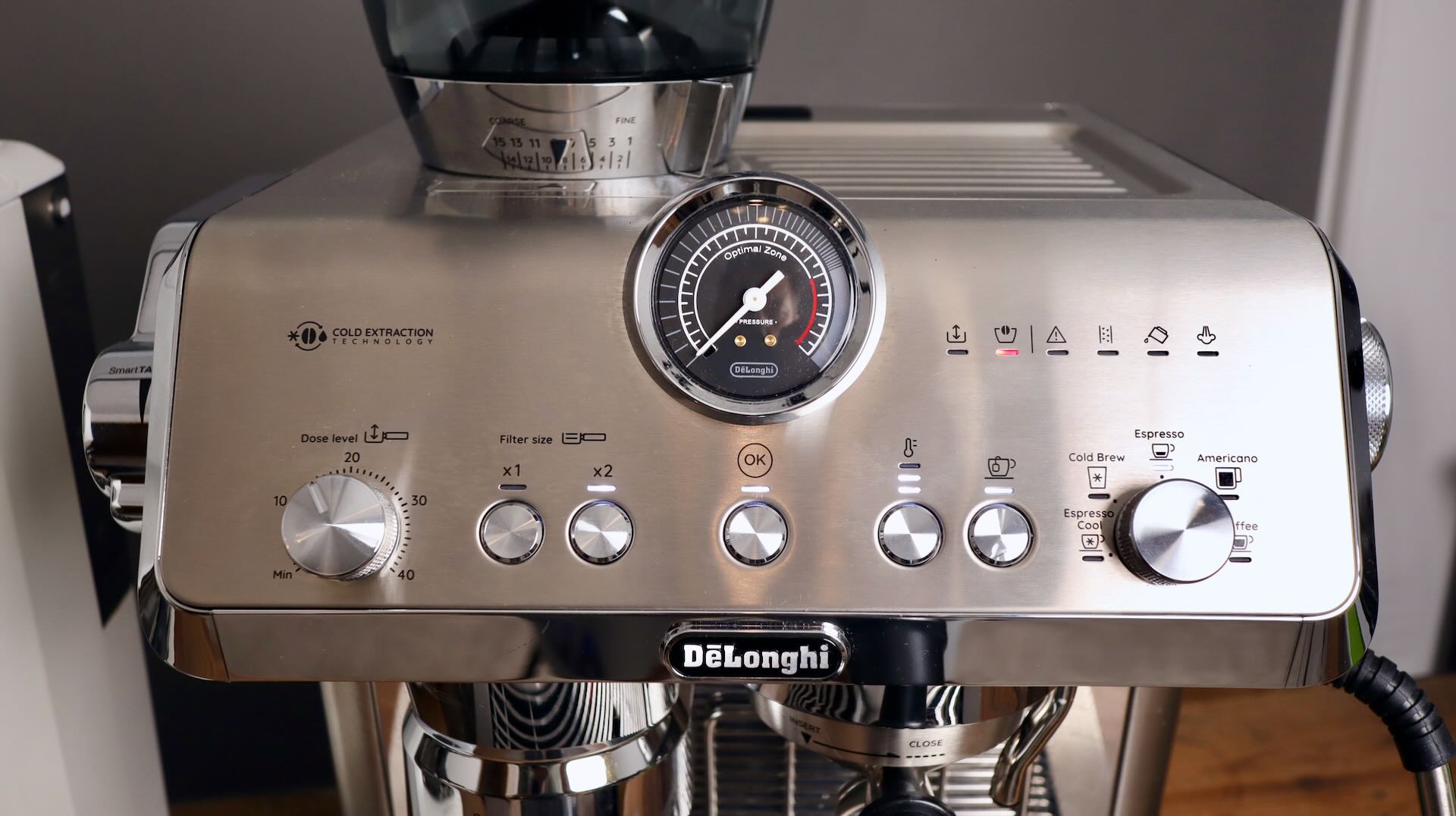
A nice logical panel layout on the Delonghi La Specialista Opera

Delonghi La Specialista Opera – Operator Panel

Quicky Design Inclusions

Something I’ve always appreciated about Breville are the unexpected niceties. For example, when you pull out the drip tray, a little storage bin comes out with it, where you can store your baskets, backflushing disk, and more. It’s a nice little feature, for sure.

The Delonghi does not come with such handy little storage, but does come with a nice to have feature itself: a foldaway cup tray. Using a little espresso cup? Fold down the tray to use it. Making a larger coffee crema? Fold the cup tray up and out of the way – it attached magnetically to the back plate of the machine (this part is magnetic, contrary to the rest of the casing).
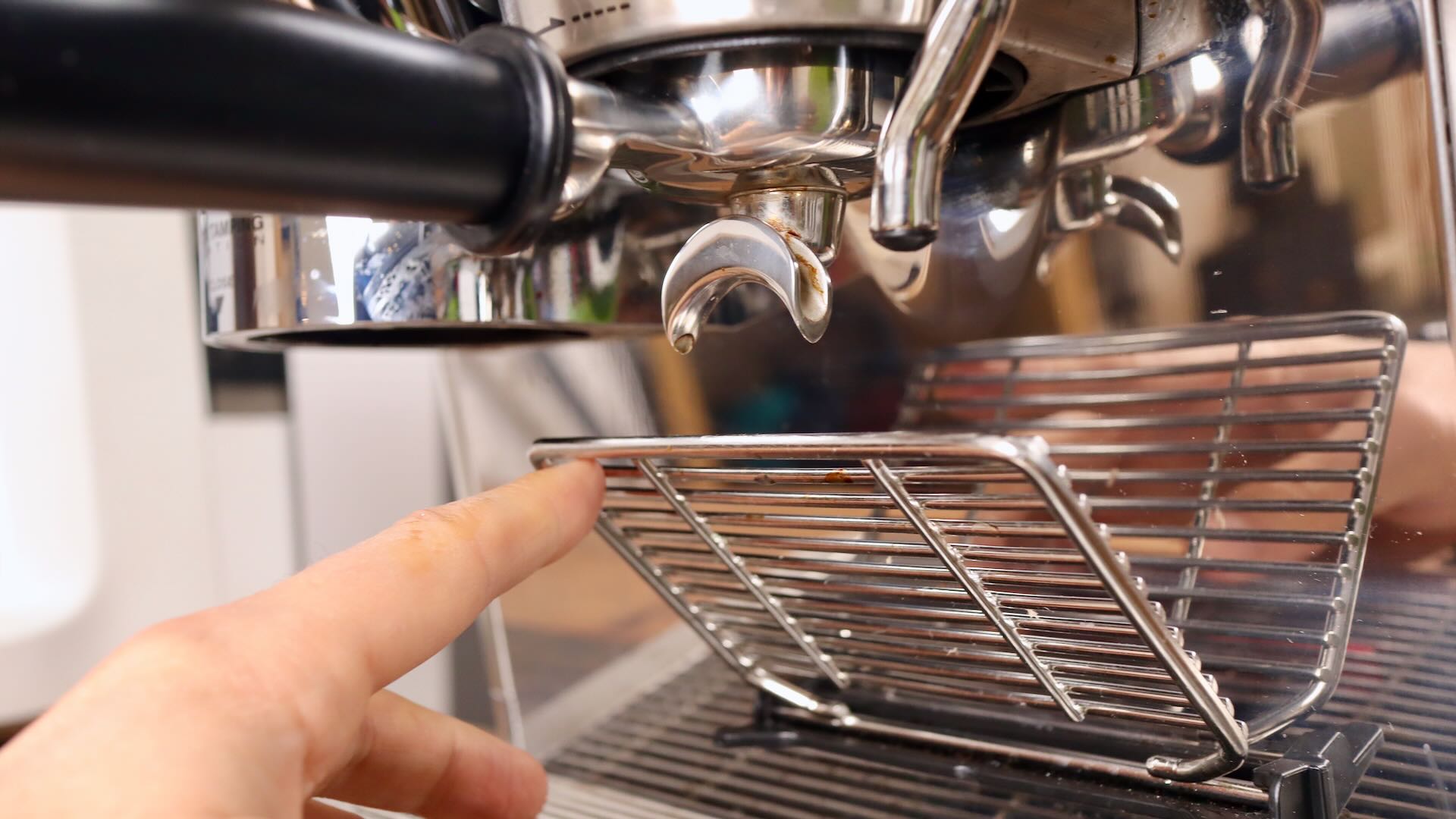
The delightful foldaway cup tray on the Delonghi La Specialista Opera

Delonghi La Specialista Opera – Fold away Cup Tray

Quietness

One thing that really surprised me about the La Specialista Opera was just how quiet it is while extracting. While both of these machines use vibratory pumps, the Opera is a good amount quieter than the Barista Express Impress. I think this is either due to some casing dampening, or more likely due to pump control. Either way, it makes for a more premium experience, and should be less annoying to other members of the household.

Water Spouts

Now this may not interest many of you, but the water spout is better on the Delonghi. On the Barista Express Impress, it sputters a lot, and creates a mess on your countertop. This is exacerbated if you’re wanting to put hot water on top of an espresso extraction for an Americano, as it will sputter espresso out of the cup.

The Opera’s water spout does not sputter, and it’s also placed much better – right next to the brew group. This means that you can put your cup under the portafilter spouts and water spout, press Americano, and walk away. It will make the Americano for you, without you having to wait there and move the cup. Very nice. You can use that extra time to make toast or get some other breakfast ready.

Sizing and Dimensions – 51mm vs 54mm

Something I often forget to mention is the sizing. Much depends on the portafilter and basket size, which in the case of the Delonghi is 51mm. Delonghi never sways from their 51mm basket sizing. Breville in this case uses 54mm. Both of these sizes are very common, and you can therefore find a lot of after market parts for both.

I actually like these smaller diameter portafilters better than the larger 58mm variant. For me, the taste is just as good or better with the deeper pucks these smaller diamter portafilters make, and also a little more forgiving. On top of that, they’re more ergonomic – the puck knock outs are much easier on smaller deeper pucks, compared to larger more shallow pucks. Believe me, that makes a difference in workflow.
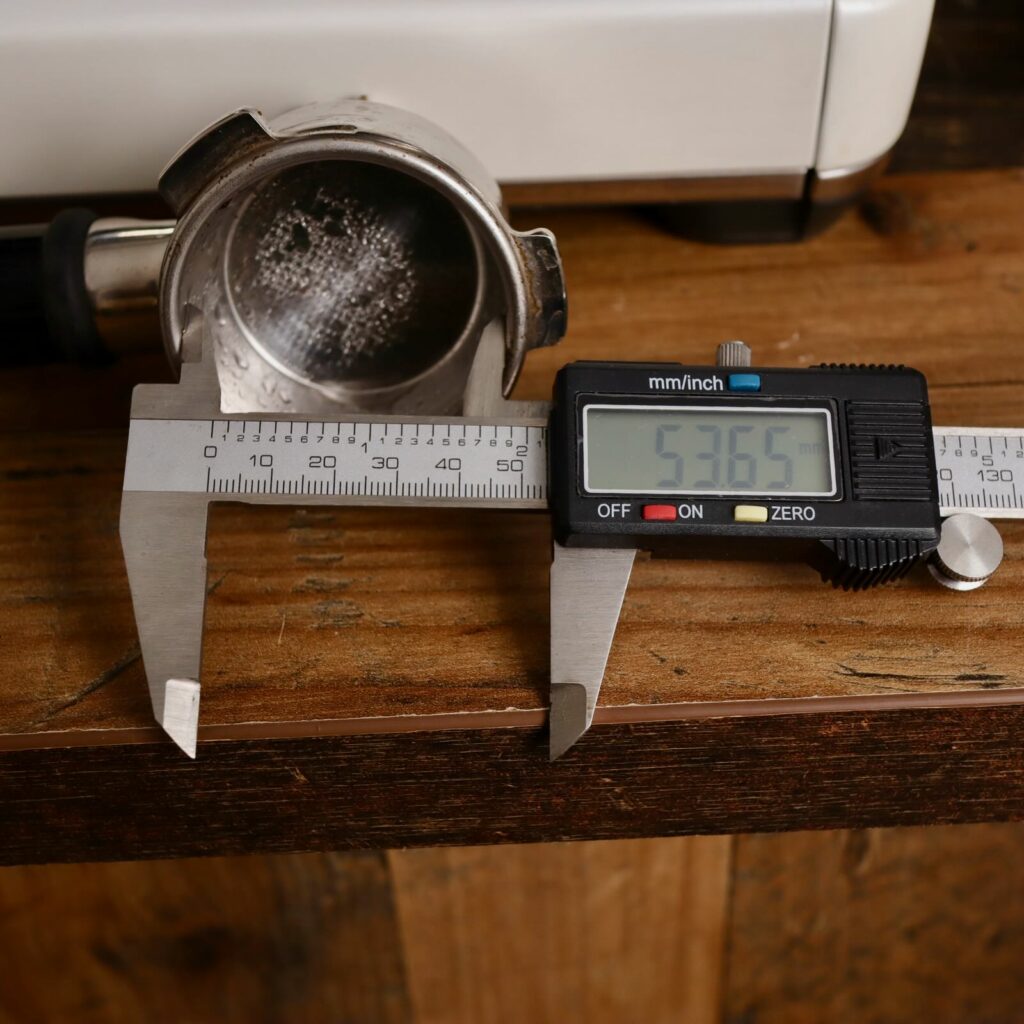
The Breville Barista Express Impress has a 54mm portafilter

Breville Barista Express Impress – 54mm Portafilter
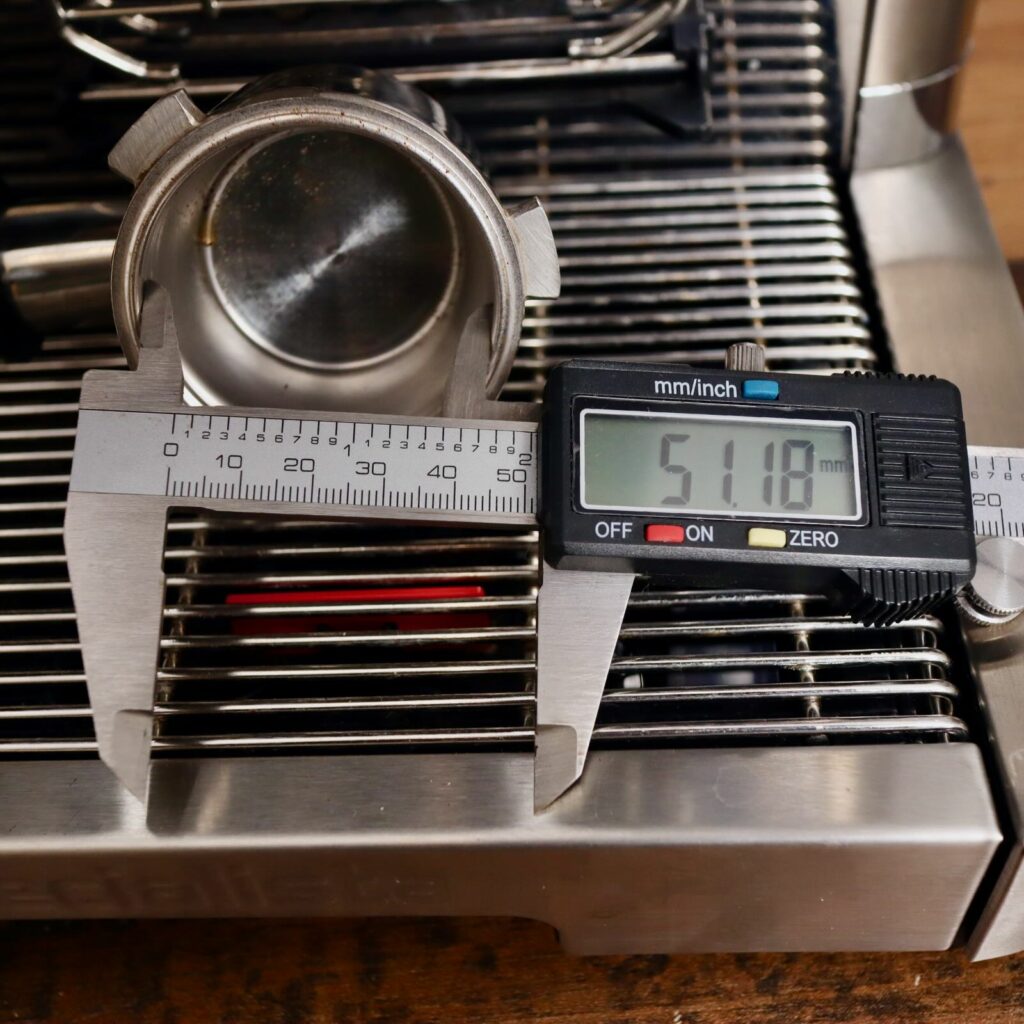
Delonghi La Specialista Opera uses a 51mm portafilter

Delonghi La Specialista Opera – 51mm Portafilter

Verdict – Which is better: Breville or Delonghi?

In this case, for me it’s a bit of a toss up. I honestly like the performance a bit better on the Delonghi, and I really appreciate the included water and bean sensor. But, the tamper is not as good as the Breville, and it’s a big disadvantage that the bean hopper is not removable. My wife also prefers the looks of the Barista Express Impress. If it were just up to me, I’d probably take the Delonghi. My wife would take the Breville.

But of course a big deciding factor are the cold drinks. Anyone looking to get cold drinks will NEED to choose the Opera, if they are considering exactly these two machines.

Honestly, they’re both very good, and offer a lot of bang for the buck, in my opinion, compared to other options out there.

Check pricing and online reviews below:

Breville Barista Express Impress

Breville Barista Express Impress

La Specialista Opera EC9555

Specifications

Breville Barista Express Impress:

  • 317 mm x 368 mm x 419 mm OR 12.5″D x 14.5″W x 16.5″H
  • 10.75 kg or 23.7 pounds
  • 1550 Watt thermoblock
  • 25 click stainless steel grinder, time based
  • 2 liter OR 68 ounce water tank
  • 20 second start up time
  • 3 way solenoid valve
  • Made in China

Delonghi La Specialista Opera

  • 380 mm x 370 mm x 445 mm OR 15 x 14.5 x 17.5 inches (width x depth x height)
  • 13.2 kg or 29 pounds
  • 1550 Watt thermoblock
  • 15 click stainless steel grinder, time based
  • 2 liter OR 68 ounce water tank
  • 20 second start up time
  • 3 way solenoid valve
  • Made in China

How to Save a little..

While the Touch Impress is quite an expensive machine, if you live in the UK or EU, I can provide you with a 15% off coupon if you like. Just enter your info in the form below.

    Videos:

    More Media:
    Here are the Breville Barista Express Impress and Delonghi La Specialista Opera from the front

    Breville Barista Express Impress vs Delonghi La Specialista Opera v2

    Here are the Breville Barista Express Impress and Delonghi La Specialista Opera from the steam wand side

    Breville Barista Express Impress vs Delonghi La Specialista Opera – Steam Wands
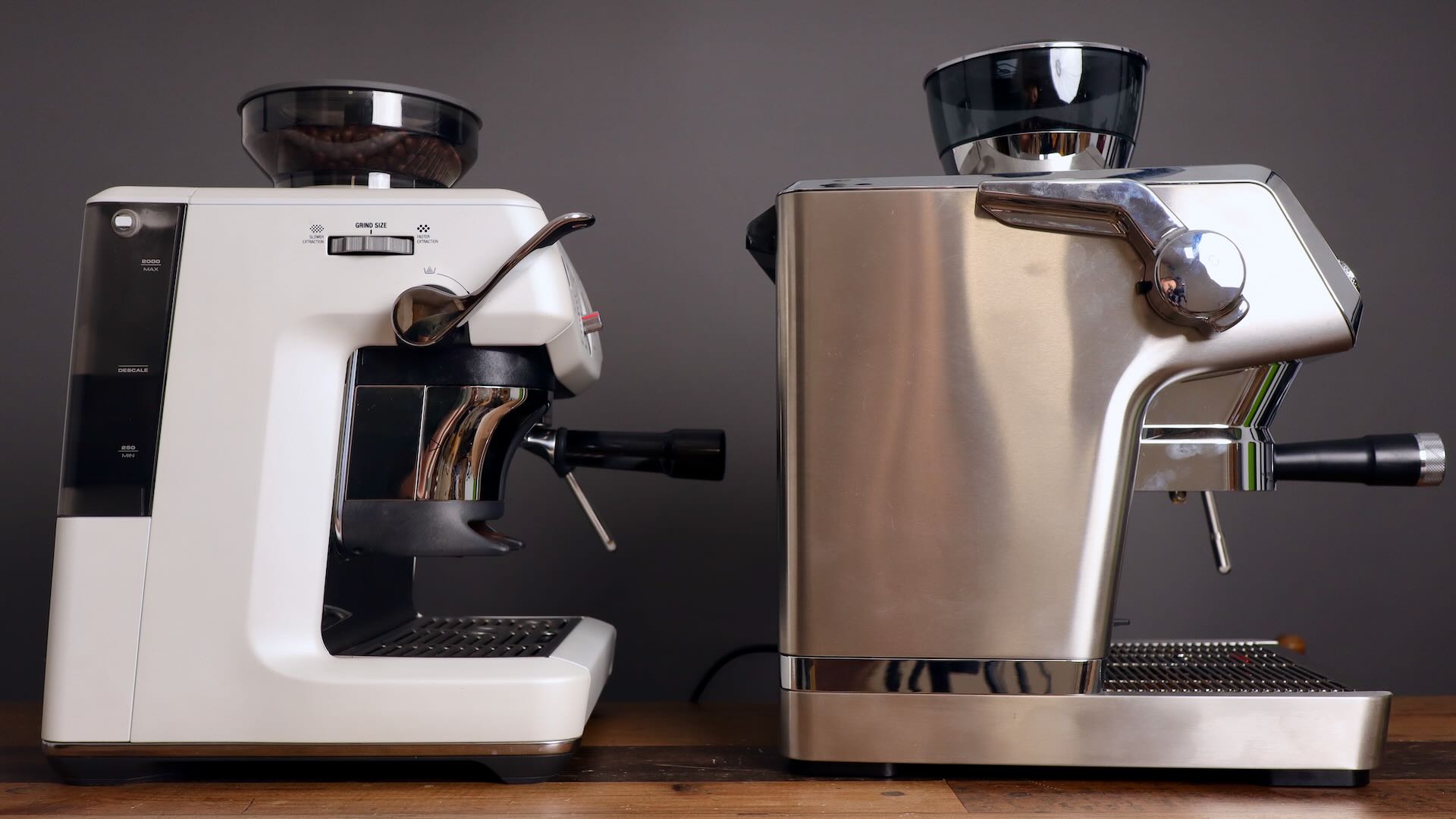
    Here are the Breville Barista Express Impress and Delonghi La Specialista Opera from the tamper side

    Breville Barista Express Impress vs Delonghi La Specialista Opera – Integrated Tamping Levers

    Here are the Breville Barista Express Impress and Delonghi La Specialista Opera from behind

    Breville Barista Express Impress vs Delonghi La Specialista Opera – Back Water Tanks

    2025-05-01T12:04:08+00:00February 13th, 2025|Reviews, Semiautomatic|

    About the Author:

    Avatar photo
    Engineer by day, YouTube and Content Creator part-time. B.S. and M.S. in Electrical Engineering.

    Delonghi La Specialista Opera vs Breville Barista Express Impress

    Here are the Breville Barista Express Impress and Delonghi La Specialista Opera from the front
    Barista Express Impress gegen La Specialista Opera

    Breville gegen Delonghi – ein ständiger Kampf.

    Breville (oder Sage, wie es in Europa genannt wird) ist seit langem der König der halbautomatischen Espressomaschinen für den Hausgebrauch. Selbst heute, da sie mehr als 10 Jahre alt ist, ist die Barista Express der meistverkaufte Halbautomat weltweit. Ihr neueres Geschwistermodell, die Express Impress, geht noch einen Schritt weiter und bietet eine integrierte Stopfvorrichtung.

    Delonghi brachte vor einigen Jahren das Modell La Specialista Arte EC9155 auf den Markt, das mit der Barista Express konkurrieren sollte, aber meiner Meinung nach scheiterte es, da es zu wenige Mahlgradeinstellungen und einige Herstellungsprobleme hatte.

    Doch jetzt ist Delonghi mit der La Specialista Opera EC9555 mit einem deutlich verbesserten Modell zurück. Sie verfügt jetzt über genügend Mahlgradeinstellungen und einige neue, nützliche Funktionen, die bei der Breville-Linie fehlen. Am wichtigsten ist vielleicht die Getränkeauswahl.

    Breville Barista Express Impress

    Breville Barista Express Eindruck

    La Specialista Oper EC9555

    Getränkeauswahl

    Das ist der Punkt, an dem die Opera wirklich glänzt. Er bietet neben einem normalen Espresso auch die Möglichkeit eines Americano und einer Kaffee-Crema. Vielleicht am wichtigsten für neue Benutzer ist jedoch die Möglichkeit, kalte Getränke zuzubereiten! Die Opera kann einen ‘Cool Espresso’ und einen ‘Cold Brew’ Kaffee zubereiten. Dies sind Getränke, die in der Barista Express Linie von Breville fehlen.

    Die Breville hat nur zwei Optionen, um entweder eine volumetrische Extraktion für eine oder zwei Tassen Espresso zu starten. In dieser Hinsicht ist sie also ziemlich einfach, obwohl sie gut funktioniert. Was die Barista Express-Linie jedoch bietet, ist eine einstellbare Pre-Infusion. Die Einstellung der Pre-Infusion ist etwas, das Delonghi ganz weggelassen hat.

    I like the drink menu on the Delonghi La Specialista Opera

    Delonghi La Specialista Opera – Drink Menu

    Pre-Infusion

    Wenn Sie bei der Breville die 1-Tassen- oder 2-Tassen-Taste gedrückt halten, gelangen Sie in den “Manuellen Modus” und können bis zu 60 Sekunden lang mit einem niedrigeren Pumpendruck vorglühen. Sobald Sie die Taste loslassen, beginnt die Extraktion mit vollem Druck. Das ist wirklich eine nette Funktion, mit der man experimentieren kann, vor allem, wenn man neue Bohnen hat und nicht weiß, wie lange die Extraktion dauern wird.

    Die Delonghi hingegen hat keine Möglichkeit, die Vorinfusion zu ändern, obwohl sie tatsächlich 7 Sekunden lang vorinfundiert, dann 1 Sekunde pausiert und dann mit vollem Druck extrahiert. Aber das scheint sich nicht negativ auf die Getränkequalität der Delonghi auszuwirken, denn ich habe einige ausgezeichnete Getränke mit ihr zubereitet. Lassen Sie uns als nächstes darüber sprechen.

    Qualität der Getränke

    Ich bin der Meinung, dass beide Maschinen eine sehr gute Getränkequalität liefern können, wenn man einige Faktoren berücksichtigt. Erstens brauchen Sie ziemlich frisch geröstete Bohnen, etwa 2 Wochen bis 2 Monate nach dem Röstdatum. Zweitens sollten die Maschinen vollständig aufgewärmt sein, einschließlich ihrer Portfilter. Ich würde vorschlagen, die Maschinen 1-2 Mal ohne Kaffeesatz durchlaufen zu lassen, um die Wasserkreisläufe, Brühgruppen und Filter aufzuwärmen.

    Was den Espresso betrifft, so können beide Maschinen ein schönes, sirupartiges, schokoladiges Getränk für mitteldunkle Röstungen liefern, vorausgesetzt, Mahlgrad und Dosierung sind gut eingestellt. Streben Sie die doppelte Ausbeute an – das heißt, wenn Sie 16 Gramm gemahlenen Kaffee in den Korb geben, sollten Sie 32 Gramm in 25-30 Sekunden ausgeben.

    Sie können nicht nur einen guten traditionellen Espresso zubereiten, sondern sind auch für leichtere Röstungen besser geeignet als ihre Vorgänger, da man die Temperatur erhöhen kann. Die Opera kann auf 96 Grad Celsius eingestellt werden, während die Barista Express Impress auf 95 Grad Celsius eingestellt werden kann. Dies führt dazu, dass die Extraktion heiß genug ist, um trinkbare, nicht zu saure Espressos mit leichteren Röstungen zu erhalten. Trotzdem glaube ich nicht, dass diese beiden Maschinen wirklich für leichtere Röstungen geeignet sind. Ihre Mühlen sind hier die Engpässe.

    Mühlen

    Sowohl die La Specialista Opera als auch die Barista Express Impress verwenden sehr ähnliche Mahlwerke – sie sind konisch, aus Edelstahl, klein und werden von kleinen Motoren angetrieben. Der Express Impress verfügt über 25 Einstellmöglichkeiten, während der La Specialista Opera 15 Einstellmöglichkeiten bietet. Die Express Impress übertrifft die La Specialista Opera also mit einem größeren Einstellbereich. Allerdings habe ich mich bei der Opera immer zwischen 8 und 10 bewegt, und das hat mir gereicht.

    Die Breville hat jedoch einen weiteren Vorteil: den Bohnenbehälter. Er ist bei der Breville besser, weil er abnehmbar ist. Der Bohnenbehälter der Opera ist feststehend und kann zum Reinigen oder für den Zugang zu den Graten nicht entfernt werden. Für manche Leute ist das ein No-Go.

    Die Opera hat jedoch einen wirklich coolen Trick in petto – sie verfügt über einen Bohnenbehälter-Sensor. Vorbei sind die Zeiten, in denen man mit einem leeren Mahlwerk auf Bohnen warten musste, weil sie ausgegangen waren. Die Maschine zeigt mit einer leuchtenden Signallampe an, dass die Bohnen nachgefüllt werden müssen. Das ist cool! Das funktioniert mit zwei Photoeye-Sensoren, die in den Trichter eingebaut sind. Apropos Sensoren, dafür bekommt die Delonghi im nächsten Abschnitt Punkte…

    The Breville Barista Express Impress has 25 grind settings

    Breville Barista Express Impress – 25 Grinding Settings

    The Delonghi La Specialista Opera has 15 grind settings

    Delonghi La Specialista Opera – 15 Grinding Settings

    Here is the Breville Barista Express Impress from above

    Breville Barista Express Impress from Above

    Delonghi La Specialista Opera from Above

    Wassertank

    Sowohl die Delonghi als auch die Breville haben große 2-Liter-Wassertanks, aber die Delonghi hat einen entscheidenden Vorteil: Sie verfügt über einen Schwimmer-Sensor für den Wasserstand. Daher kann man nie mit zu wenig Wasser ein Getränk zubereiten. Sie wissen gar nicht, wie oft mir bei der Barista Express Impress schon das Wasser ausgegangen ist, als ich gerade einen Shot zubereiten wollte! Dann können Sie den abgebrochenen Schuss wegwerfen.

    Ich finde auch, dass die Delonghi insgesamt weniger Wasser verbraucht. Beide Geräte verwenden etwas Wasser, um ihre Thermoblöcke nach dem Milchaufschäumen abzukühlen. Die Breville ist jedoch ein hungriges Mädchen und verbraucht beim Abkühlen wirklich viel mehr Wasser als die Delonghi. Hier ein Punkt für die Delonghi.

    Das führt uns zu den Abtropfschalen und deren Entleerung, die bei der Breville sicherlich besser ist.

    Here are the Breville Barista Express Impress and Delonghi La Specialista Opera from behind

    Breville Barista Express Impress vs Delonghi La Specialista Opera – Back Water Tanks

    Abtropfschalen und Verarbeitungsqualität

    Die Abtropfschale der Breville gefällt mir wirklich besser. Beide sind zwar solide verarbeitet, aber die Breville lässt sich leichter abwischen, leichter in die Spüle kippen und hat auch ein größeres Fassungsvermögen. Ich habe oft das Wasser in der Tropfschale der Opera verschüttet, während ich mich zur Spüle bewegte, da sie zu klein dimensioniert ist und zu spät anzeigt, dass man sie auskippen soll.

    Was die Verarbeitungsqualität angeht, so sind sie meiner Meinung nach recht ähnlich. Sie bestehen beide aus einem Metallgehäuse, das bei beiden Modellen geerdet ist. Das Metall der Breville ist magnetisch, während es das der Delonghi Opera nicht ist. Das ist entweder gut oder schlecht, je nachdem, wie man es sieht. Ich mag magnetische Gehäuse, um Dinge mit Magneten daran zu befestigen.

    Ich würde sagen, dass die Verarbeitung bei der Breville vielleicht ein wenig raffinierter ist, aber nicht viel. Delonghi hat hier wirklich aufgeholt und die Opera mit einem komplett rostfreien Design ausgestattet, sogar an der Frontblende. Wo die Breville aber definitiv gewinnt, ist der integrierte Tamper.

    I like the hidden cubby hole on the Breville Barista Express Impress

    Breville Barista Express Impress Hidden Storage

    Integrierte Stampfer

    Ich muss es einfach sagen – Breville hat von Anfang an einen großartigen Tamper entwickelt. Er sieht schick aus, hat einen abnehmbaren Deckel, dreht den Puck automatisch um 8 Grad und sein glatter Boden hält den Kaffeesatz dort, wo er hingehört – im Korb. Außerdem ist er super robust.

    Ursprünglich war ich skeptisch gegenüber dem integrierten Tamper in der La Specialista-Linie – sie sehen billig gemacht aus. Tatsächlich fühlt sich der Hebel ziemlich billig an, vor allem im Vergleich zu dem der Breville, aber er funktioniert gut. Die Delonghi macht einen guten Job beim Stopfen, auch wenn das haptische Gefühl nicht so gut ist. Aber sie kann nicht automatisch den Puck polieren. Dazu muss man den Stopfhebel unten lassen und den Siebträger aus der Halterung nehmen. Durch diese Bewegung wird eine Puck-Politur erzwungen.

    Das vielleicht größte Problem, das ich mit dem Delonghi-Stampfer habe, ist, dass er sich auf dem Maschinenkörper nicht besonders robust anfühlt. Man kann sehen, wie sich die linke Seite der Maschine beim Stopfen etwas durchbiegt – das macht nicht den besten Eindruck.

    This is a clever integrated tamping system, in Breville's espresso machines

    Impress Puck Tamper

    The Impress tamper on the Breville Barista Express Impress

    Breville Barista Express Impress – Tamper

    Here is the integrated tamper on the Delonghi La Specialista Opera

    Delonghi La Specialista Opera – Tamper

    Dampfstäbe

    Ich würde sagen, dass beide Dampfstäbe mehr als ausreichend sind, da sie beide schöne, seidige Milch für Cappuccinos und Latte Art aufschäumen können. Sie sind jedoch beide etwas langsam und brauchen 10-20 Sekunden, um sich auf Dampftemperatur zu erwärmen, und etwa 60 Sekunden, um etwa 200 ml Milch auf 60 Grad Celsius zu erwärmen.

    Ich bevorzuge jedoch die Dampfdüse der Delonghi, wenn es um die Reinigung geht. Da die Opera mit einem “nicht brennenden” Dampfrohr arbeitet, wird die Außenseite des Rohrs nicht zu heiß, und die Milch lässt sich nach dem Dampfen ganz einfach abwischen. Der Barista Express hingegen verfügt nicht über diese Funktion. Er wird sehr heiß, und die Milch setzt sich leicht fest. Sie lässt sich nur schwer abwischen und sieht irgendwie eklig aus.

    Entwurf und HMI

    Ehrlich gesagt, gefallen mir beide. Wenn ich mich allerdings für eine entscheiden müsste, dann wäre es die Breville Express Impress. Sie sieht einfach cooler aus, mit ihrer abgewinkelten Blende und den abgerundeten Ecken. Der integrierte Tamper sieht auch cooler aus als der des Opera. Nicht, dass die Opera nicht cool aussehen würde, denn das tut sie. Das ist eine Frage der persönlichen Vorliebe.

    Was ich an beiden Geräten mag, sind ihre haptischen Eigenschaften. Beide haben analoge Manometer, so dass man den Druckbereich bei der Extraktion kennt. Außerdem verfügen beide über Drehräder, an denen man eine Auswahl treffen kann, oder über Tasten, die man drücken muss, um Befehle auszuführen (doppelten Espresso extrahieren). Ich persönlich ziehe diese haptische Erfahrung den Touchscreens vor.

    A logical panel layout on the Breville Barista Express Impress

    Breville Barista Express Impress – Operator Panel

    A nice logical panel layout on the Delonghi La Specialista Opera

    Delonghi La Specialista Opera – Operator Panel

    Quicky Design Einschlüsse

    Etwas, das ich an Breville schon immer geschätzt habe, sind die unerwarteten Annehmlichkeiten. Wenn man zum Beispiel die Abtropfschale herauszieht, kommt ein kleiner Aufbewahrungsbehälter zum Vorschein, in dem man seine Körbe, die Rückspülscheibe und vieles mehr aufbewahren kann. Das ist auf jeden Fall ein nettes kleines Feature.

    Die Delonghi verfügt zwar nicht über eine solche praktische kleine Ablage, dafür aber über eine sehr nützliche Funktion: eine ausklappbare Tassenablage. Sie brauchen eine kleine Espressotasse? Klappen Sie das Tablett herunter, um es zu verwenden. Sie möchten eine größere Crema zubereiten? Klappen Sie die Tassenablage nach oben und aus dem Weg – sie ist magnetisch an der Rückwand der Maschine befestigt (dieser Teil ist magnetisch, im Gegensatz zum Rest des Gehäuses).

    The delightful foldaway cup tray on the Delonghi La Specialista Opera

    Delonghi La Specialista Opera – Fold away Cup Tray

    Geräuschlosigkeit

    Eine Sache, die mich bei der La Specialista Opera wirklich überrascht hat, war, wie leise sie beim Extrahieren ist. Obwohl beide Maschinen mit Vibrationspumpen arbeiten, ist die Opera ein gutes Stück leiser als die Barista Express Impress. Ich denke, das liegt entweder an der Dämpfung des Gehäuses oder eher an der Pumpensteuerung. Auf jeden Fall bietet sie ein hochwertigeres Erlebnis und dürfte andere Mitglieder des Haushalts weniger stören.

    Wasserspeier

    Das mag viele von Ihnen nicht interessieren, aber der Wasserauslauf ist bei der Delonghi besser. Bei der Barista Express Impress sprudelt er sehr stark und verursacht ein Chaos auf der Arbeitsplatte. Dies wird noch verschlimmert, wenn Sie heißes Wasser auf eine Espresso-Extraktion für einen Americano geben wollen, da der Espresso dann aus der Tasse spritzt.

    Der Wasserauslauf der Opera sprudelt nicht, und er ist auch viel besser platziert – direkt neben der Brühgruppe. Das heißt, Sie können Ihre Tasse unter den Siebträger und den Wasserauslauf stellen, auf Americano drücken und weggehen. Die Maschine macht den Americano für Sie, ohne dass Sie warten und die Tasse bewegen müssen. Das ist sehr schön. Sie können diese zusätzliche Zeit nutzen, um Toast zu machen oder ein anderes Frühstück vorzubereiten.

    Größenbestimmung und Abmessungen – 51mm vs. 54mm

    Was ich oft vergesse zu erwähnen, ist die Größe. Vieles hängt von der Größe des Siebträgers und des Korbs ab, die im Fall der Delonghi 51 mm beträgt. Delonghi weicht nie von seiner 51-mm-Korbgröße ab. Breville verwendet in diesem Fall 54 mm. Beide Größen sind weit verbreitet, und Sie können daher viele Ersatzteile für beide finden.

    Ich mag diese Portafilter mit dem kleineren Durchmesser eigentlich lieber als die größere 58-mm-Variante. Für mich ist der Geschmack genauso gut oder besser mit den tieferen Pucks, die diese Portafilter mit kleinerem Durchmesser herstellen, und auch ein wenig verzeihender. Außerdem sind sie ergonomischer – das Ausklopfen der Pucks ist bei den kleineren, tieferen Pucks viel einfacher als bei den größeren, flacheren Pucks. Glauben Sie mir, das macht einen Unterschied im Arbeitsablauf.

    The Breville Barista Express Impress has a 54mm portafilter

    Breville Barista Express Impress – 54mm Portafilter

    Delonghi La Specialista Opera uses a 51mm portafilter

    Delonghi La Specialista Opera – 51mm Portafilter

    Fazit – Was ist besser: Breville oder Delonghi?

    In diesem Fall ist es für mich ein bisschen wie ein Unentschieden. Ehrlich gesagt gefällt mir die Leistung der Delonghi ein bisschen besser, und ich schätze den mitgelieferten Wasser- und Bohnensensor sehr. Aber der Tamper ist nicht so gut wie bei der Breville, und es ist ein großer Nachteil, dass der Bohnenbehälter nicht abnehmbar ist. Meine Frau bevorzugt auch das Aussehen der Barista Express Impress. Wenn es nur nach mir ginge, würde ich wahrscheinlich die Delonghi nehmen. Meine Frau würde sich für die Breville entscheiden.

    Aber natürlich sind die Kaltgetränke ein entscheidender Faktor. Wer kalte Getränke haben möchte, MUSS sich für den Opera entscheiden, wenn er genau diese beiden Geräte in Betracht zieht.

    Ehrlich gesagt sind sie beide sehr gut und bieten meiner Meinung nach im Vergleich zu anderen Optionen auf dem Markt ein gutes Preis-Leistungs-Verhältnis.

    Preise und Online-Bewertungen finden Sie unten:

    Breville Barista Express Impress

    Breville Barista Express Eindruck

    La Specialista Oper EC9555

    Spezifikationen

    Breville Barista Express Impress:

    • 317 mm x 368 mm x 419 mm ODER 12,5 “T x 14,5 “B x 16,5 “H
    • 10,75 kg oder 23,7 Pfund
    • 1550 Watt Thermoblock
    • 25-Klick-Edelstahl-Schleifer, zeitabhängig
    • 2 Liter ODER 68 Unzen Wassertank
    • 20 Sekunden Anlaufzeit
    • 3-Wege-Magnetventil
    • Hergestellt in China

    Delonghi La Specialista Oper

    • 380 mm x 370 mm x 445 mm ODER 15 x 14,5 x 17,5 Zoll (Breite x Tiefe x Höhe)
    • 13,2 kg oder 29 Pfund
    • 1550 Watt Thermoblock
    • 15-Klick-Edelstahl-Schleifer, zeitabhängig
    • 2 Liter ODER 68 Unzen Wassertank
    • 20 Sekunden Anlaufzeit
    • 3-Wege-Magnetventil
    • Hergestellt in China

    Wie man ein wenig spart…

    Der Touch Impress ist zwar ein recht teures Gerät, aber wenn Sie in Großbritannien oder der EU leben, kann ich Ihnen einen Gutschein über 15 % Rabatt anbieten, wenn Sie möchten. Geben Sie einfach Ihre Daten in das untenstehende Formular ein.

      Videos:

      Mehr Medien:

      Here are the Breville Barista Express Impress and Delonghi La Specialista Opera from the front

      Breville Barista Express Impress vs Delonghi La Specialista Opera v2

      Here are the Breville Barista Express Impress and Delonghi La Specialista Opera from the steam wand side

      Breville Barista Express Impress vs Delonghi La Specialista Opera – Steam Wands

      Here are the Breville Barista Express Impress and Delonghi La Specialista Opera from the tamper side

      Breville Barista Express Impress vs Delonghi La Specialista Opera – Integrated Tamping Levers
      Here are the Breville Barista Express Impress and Delonghi La Specialista Opera from behind

      Breville Barista Express Impress vs Delonghi La Specialista Opera – Back Water Tanks

      2025-09-26T13:34:32+00:00February 13th, 2025|Bewertungen, Halbautomatisch|

      About the Author:

      Avatar photo
      Engineer by day, YouTube and Content Creator part-time. B.S. and M.S. in Electrical Engineering.
      Go to Top